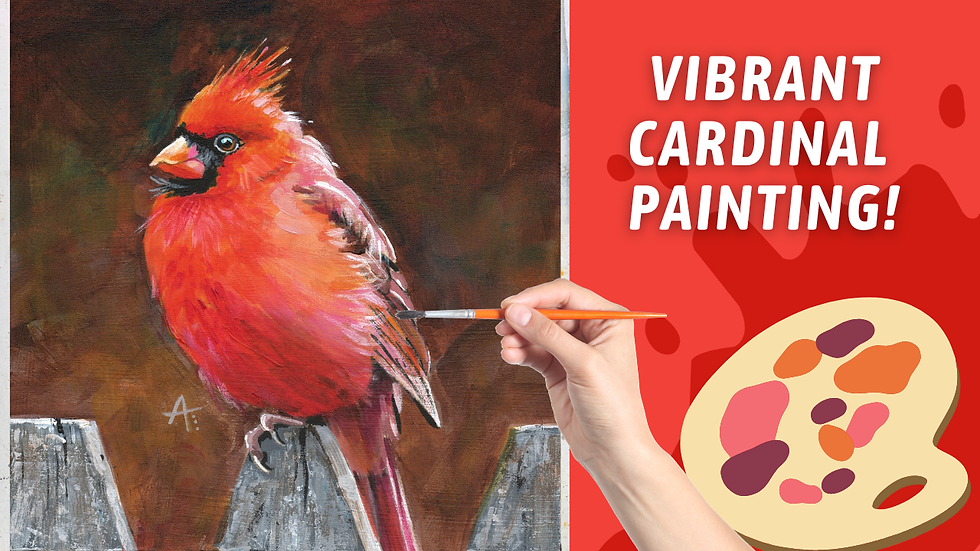
Acrylic CARDINAL Bird Painting! Traceable AVAILABLE! By: Annie Troe

Hello Joy Spreaders!
Traceable Available! Paint a painting more than once to help you improve and discover things you like. Find your values first. It can make things easier. I just love this cardinal painting & reference photo - Enjoy!
Keep an eye out on my Facebook page https://www.facebook.com/AnnieTroe/, I have giveaways, flash sales, short videos, paint demo events and more.
NEW Creative COMMUNITY Group: Annie Troe Art Friends https://www.facebook.com/groups/271621221740446
Next best place to follow me is Instagram https://www.instagram.com/annietroe/
Prints, phone cases, journals, t-shirts and more available here.
SHOP Happy Merch. for Happy People/Artists, T-Shirts, Mugs, Aprons https://annietroeartist.myspreadshop.com/
Traceables Booklet https://www.annietroe.com/traceables
GALLERIES
Ginger's Hang-Up
Music From: www.bensound.com
My goal?, to SPREAD JOY TODAY!


I can see why supporting children in the third year of school would invite discussion, since different people will bring different experiences to the same question. An activity that combines reading and explanation can reveal several kinds of understanding at once. It makes me curious about the practical side of third grade learning activities. I would probably come back to this question after trying to work through one concrete example rather than deciding immediately. What helps a child become more comfortable explaining an answer in their own words?
Considering following personal interests as a route into learning, I keep coming back to the difference between knowing about an idea and putting it into practice. A familiar interest can provide the motivation to practise a skill that initially feels difficult. It gives me a more concrete starting point for thinking about interest based learning. I do not have a settled view yet, but this seems like a good place to slow down and look more closely. How can a hobby become a useful learning project without losing its enjoyment?
I can see why developing useful skills through small tasks would invite discussion, since different people will bring different experiences to the same question. Completing a modest task can show which parts of a new skill still need attention. It also gives the phrase practical skills development a clearer meaning than a label on its own. I would be interested in a simple example, because it is often the ordinary details that make an idea memorable. How do you choose an exercise that tests understanding rather than memory alone?
My first thought about understanding civic spaces and public communication is that the everyday experience deserves as much attention as the larger explanation. A public information page becomes easier to use when its purpose is clear from the start. I would keep that thought nearby when looking for ideas about civic information literacy. I am more curious about the process than a polished result, because the steps in between are usually where questions appear. What helps visitors find the information they need without already knowing the system?
Thinking about understanding materials and practical workshop tasks, I find the smaller practical questions more interesting than a quick conclusion. Knowing what a component needs to do can make choosing a material easier to discuss. That practical perspective helps me frame practical technical skills as a theme for Jualpipapvc. The smaller details are what I would want to return to, especially when an explanation feels too broad. Which questions should come before comparing different technical options?